Henna for Hair: A Traditional Plant Extract in the Evera Red Line
Henna (Lawsonia inermis) has long been used in traditional hair colouring. In Evera's Red Line it appears as a leaf extract (Lawsonia inermis (Henna) leaf extract in the ingredient list), in the shampoo and the mask.
What Henna Is
Henna leaves naturally contain lawsone, a red-orange pigment that binds to keratin. Traditional henna paste is used to colour hair. Evera's Red shampoo and mask are not hair dyes, and we do not claim they change your colour.
Henna Extract vs Traditional Henna
Traditional henna paste is left on for hours and can deposit strong colour. Evera's Red shampoo and mask are everyday wash-and-rinse products with henna leaf extract in the formula.
They are made for regular washing. We do not claim they colour, strengthen or protect your hair.
Where You'll Find Henna in Evera Products
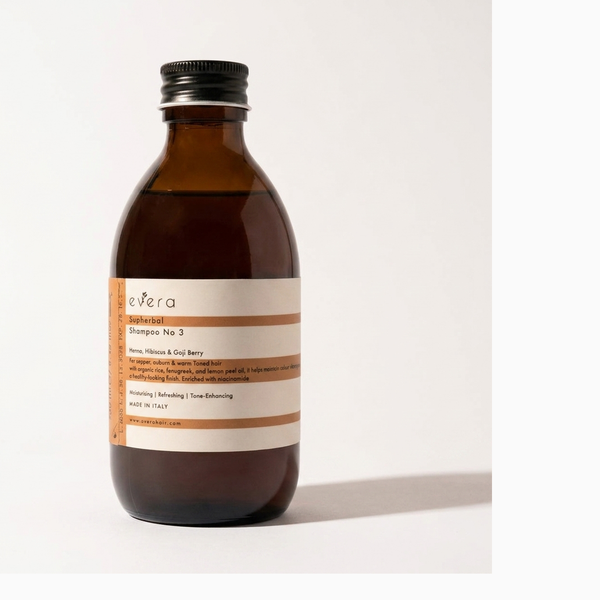
- Red Shampoo No.3: shampoo with henna leaf extract
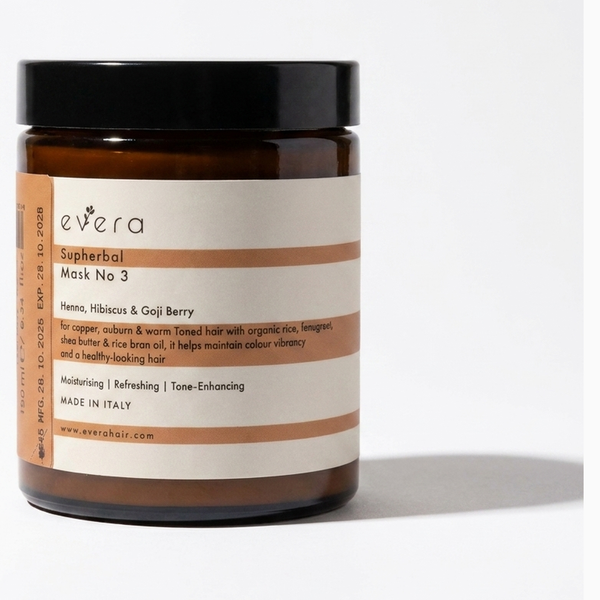
- Red Mask No.3: mask with henna leaf extract
In the Red Line, henna sits alongside hibiscus flower extract and goji (lycium) fruit extract, with rice and fenugreek extracts. The hibiscus, goji, rice and fenugreek extracts are marked organic in the ingredient list.
Frequently Asked Questions
Will Evera's henna products dye my hair?
These are everyday wash-and-rinse products, not hair dyes, and we do not claim they change your colour. Henna is a pigment, so rinse well and use an old towel the first time.
Can I use henna products on non-red hair?
The Red Line is specifically formulated for red, auburn, and warm-toned hair. For other hair colours, explore our Dark Line (with indigo), Blonde Line (with rhubarb), or Daily Line.
Is the henna in Evera products organic?
Check the ingredient list on your bottle: botanicals that come from organic farming are marked with an asterisk (*). In the Red line the henna leaf extract is not marked, so we do not describe it as organic.
Shop Products with Henna
- Red Shampoo No.3 (£38): shampoo with henna leaf extract
- Red Mask No.3: mask with henna leaf extract
How to use Henna
A step-by-step Evera ritual with the Red shampoo and mask.
- Apply Evera Supherbal Shampoo No.3 to wet hair from roots to ends. (60s)
- Massage gently for 30–60 seconds. (60s)
- Rinse thoroughly. Henna is a pigment, so use an old towel the first time. (30s)
- Once a week, if you like, follow with Supherbal Mask No.3 on clean, towel-dried hair, comb through, leave 10–15 minutes and rinse. (900s)